
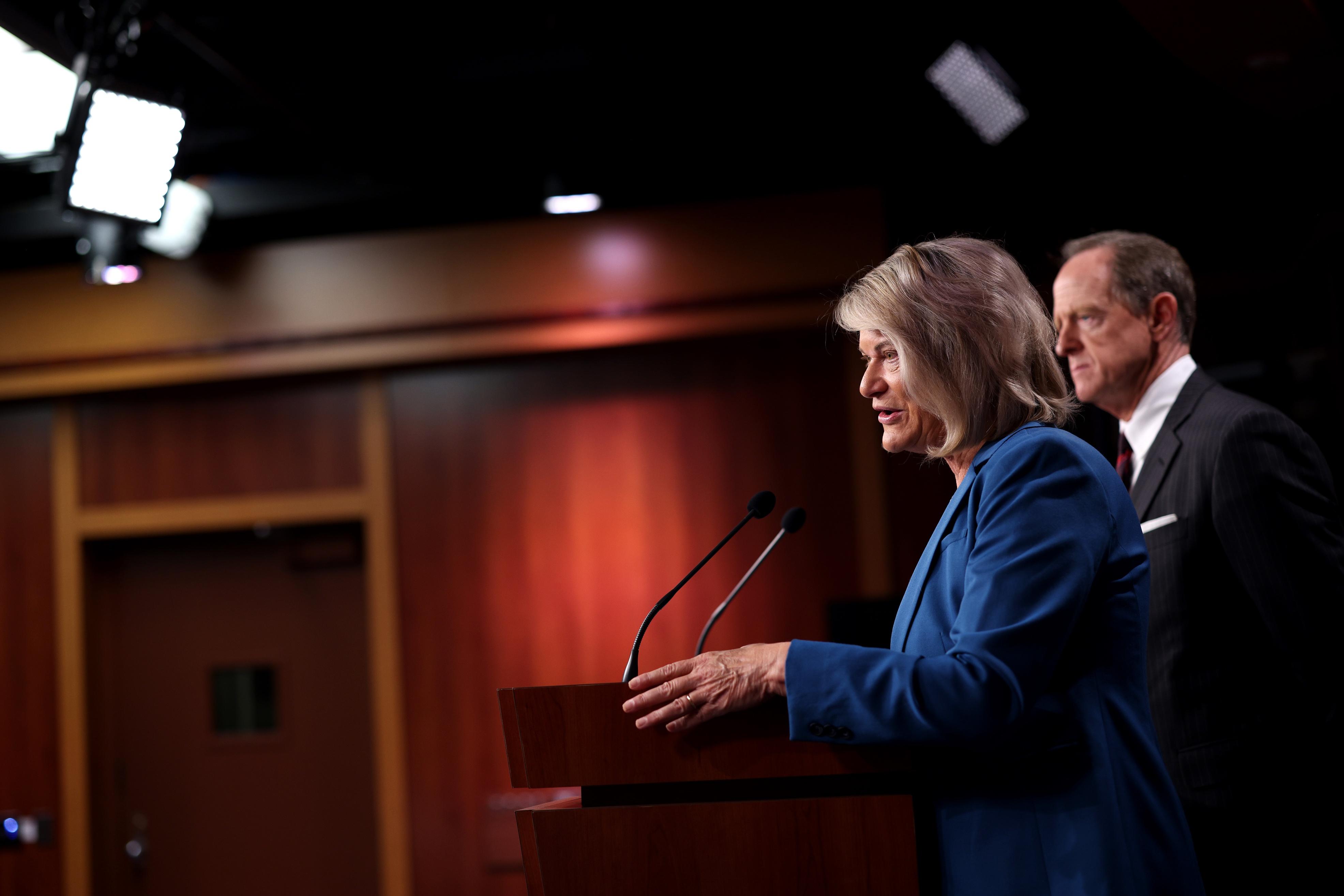
It is one month until the Senate Clarity Act faces a do or die procedural vote on September 15 that could derail years of hard work or put the market structure bill on the path to becoming law. Interestingly, the industry has been here before.
Five years ago this month, crypto had a sort of Washington coming out event. This was at the beginning of the Biden Administration when Congress was advancing an infrastructure bill.
In August 2021, a group of bipartisan U.S. Senators - Cynthia Lummis, R-Wyo; Mark Warner, D-Va; Pat Toomey, R-Pa; Kyrsten Sinema, D-Ariz; Rob Portman, R-Ohio - negotiated an amendment to the legislation. The crypto broker language focused on IRS transaction reporting rules and sought to exempt miners and wallet makers from requirements to unnecessarily collect and store sensitive private information. The young crypto industry came together and trade groups collaborated. The measure even received support from Biden’s Treasury Secretary Janet Yellen.
Toomey requested a unanimous consent vote to add the compromise language to the larger bill. Despite the momentum and positive outlook for the provision, procedure got in the way. Senate Chamber rules allow one member to be able to object and kill an action during some proceedings. Senator Richard Shelby, R-Ala, essentially held the vote on the crypto amendment hostage by objecting to the request for unanimous consent. He would only support the provision if his unrelated proposal for an additional $50 billion in military spending was also accepted. Senators did not agree to those terms and Shelby successfully blocked the vote and singlehandedly stopped the bipartisan effort. The infrastructure bill advanced without the crypto measure. Kristin Smith, executive director of the Blockchain Association, left, speaks as Jonathan Levin, co-founder and chief strategy officer of Chainalysis Inc., listens during a hearing in Washington, D.C., US, on Thursday, June 9, 2022. Photographer: Eric Lee/Bloomberg © 2022 Bloomberg Finance LP
Despite the setback, the collective action of the industry to garner support and come so close put Washington insiders on notice that crypto was a formidable power bloc. Then Blockchain Association CEO Kristin Smith led the industry effort. During a 2025 podcast interview with me, she reflected on the significance of that Washington policy milestone. “One of my more fonder memories over the years was in the summer of 2021…This was a very big crypto specific policy moment…That was when crypto realized it had a political voice and it could be a political force when it works together.”
Of course, the hope is that there will not be any such surprises during the cloture vote on September 15. Still, the lesson from five years ago is that Senate procedures can be tricky. The cloture motion will determine if the Clarity Act gets a Senate floor vote or is scrapped. Over the next few weeks, all outstanding issues must be resolved. Otherwise, cloture could be a death sentence. Despite Congress being in recess, senior staff are actively negotiating thorny issues that require bipartisan compromise.
• Reconciliation of both the Senate Banking and Agriculture Committee bill versions.
• Concessions on yield for banks, developer protection limitations for law enforcement, strengthened illicit finance measures. Senator Cynthia Lummis, a Republican from Wyoming, during a Senate Banking, Housing, and Urban Affairs Committee confirmation hearing in Washington, DC, US, on Thursday, Sept. 4, 2025. Photographer: Daniel Heuer/Bloomberg © 2025 Bloomberg Finance LP
Lummis, who was a lead negotiator in 2021, is determined to see Clarity pass before she retires at the end of this Congressional session. She had this to say recently during the intense debate before the August recess. “I will not give up because I believe to my core that this industry deserves to thrive with clear rules of the road on US soil, that consumers deserve to be protected from scams and have the confidence to participate in our digital economy, and that law enforcement deserves the tools they need to hold bad actors accountable.” To stack the deck, she and Senator Bernie Moreno, R-Ohio, just became co-signers of the Credit Card Competition Act, which banks oppose. The move signals that a choice will have to be made by groups that oppose the Clarity Act. Which legislative loss is preferable? The crypto industry was still building its Washington political muscle in 2021. All eyes are now on the sector five years later. One thing is clear, bipartisan was the gateway then and it must be again.