
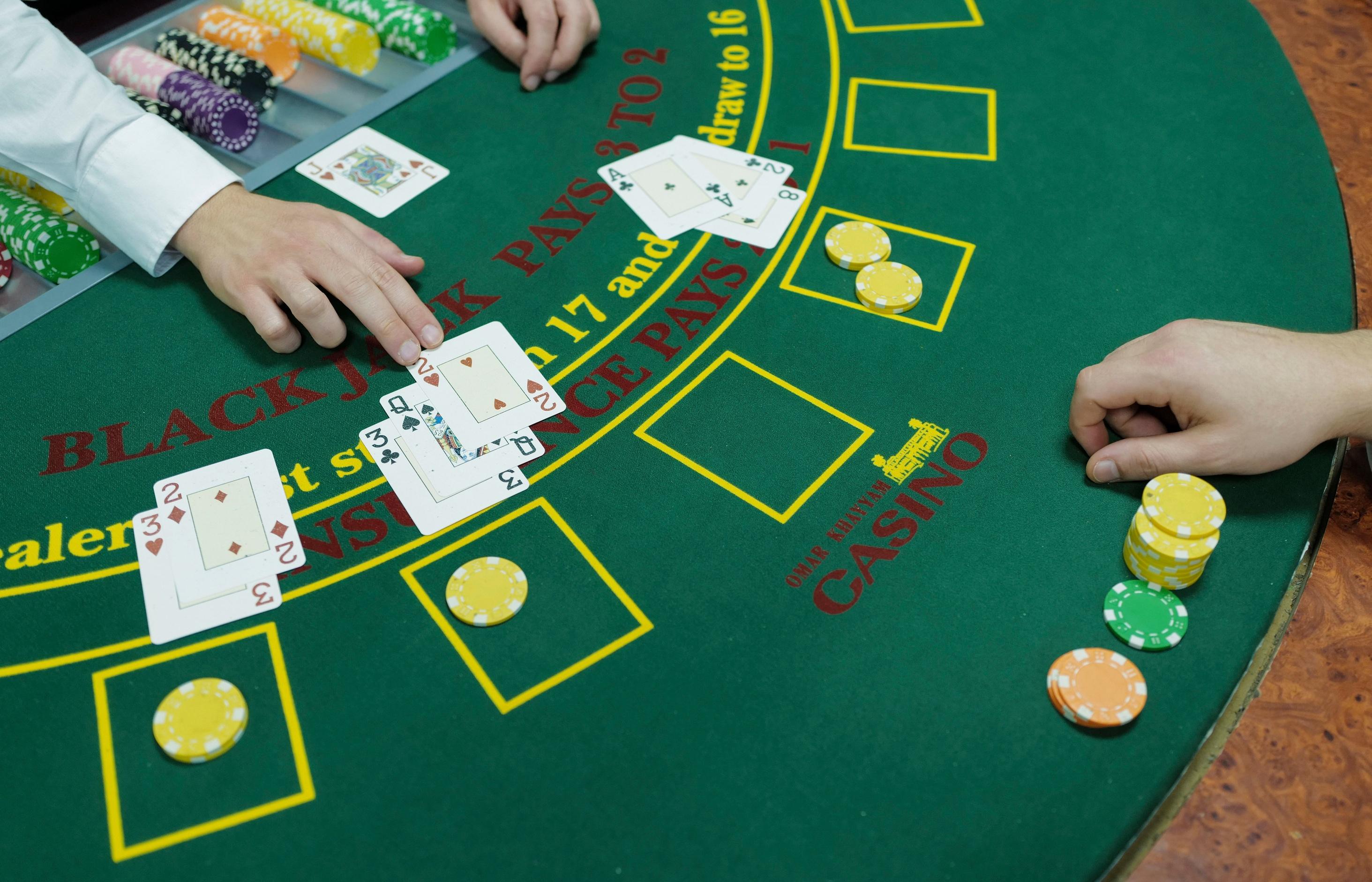
The FanDuel co-founder is announcing Monday that BetHog is winding down its consumer casino and sportsbook to put the whole company behind Sentient Studios, the business it spun out in April to license AI dealers to rival operators. The board signed off on the decision about a month ago, he said.
"It’s very hard for startups to be successful at one thing. It’s almost unheard of to be really good at two things," Eccles told me. Within months of the April launch, most of the team was working on the B2B product. "There's a lot of operators out there that would love to have this product. And BetHog is becoming a distraction."
BetHog launched in November 2024 with a $6 million seed round, founded by Eccles and fellow FanDuel alum Rob Jones. On April 22 it raised a $10 million Series A co-led by Will Ventures and RockawayX to spin out Sentient Studios, built around Sunny, the AI blackjack dealer that BetHog had been testing on its own site since October. "We found that AI Live Dealer is 10 times more popular than its Live Dealer equivalent. So people just find it less scary," Eccles said on the On The Margin podcast last year. On BetHog, he said, the AI dealer is "consistently one of the top, if not the top game in terms of players every single day."
The catch is that BetHog's market was never big enough for the product. "Even the crypto casino space is probably less than 10% of the total online casino market," Eccles said.
The pitch to operators is about cost and flexibility, not novelty. Eccles described a Latin American operator that signed a football sponsorship and wanted its live dealer studio branded to match, a six-month buildout with physical studios and staff. Software does it at once. "We can give you five tables or 5,000 tables, instantly scale up and down," he said. Language markets work the same way. "You need to hire a hundred Norwegian speakers, you need to move into a studio maybe in Malta," Eccles said of the traditional route. "We can do that instantly." The company he is aiming at is Evolution, the Stockholm-listed studio giant that dominates live dealer games. "If you look at Evolution's reports, like, 80% of their costs are studios and personnel," Eccles said. That is his reading of the accounts, but the direction is right: Evolution describes personnel as its largest operating expense, and its live casino revenue fell 3.1% to €434.9 million in the first quarter while the stock has lost more than a third of its value over the past year. Evolution chief executive Martin Carlesund has pushed back on the substitution thesis, arguing at the company's April annual meeting that authenticity is becoming more valuable online and framing virtual dealers as a separate category rather than a replacement, according to industry outlet NEXT.io. The market they are fighting over is worth $11.8 billion and headed for $34.2 billion by 2033, according to Growth Market Reports. Much of the wider gambling economy that surrounds it operates in the dark, beyond the reach of regulators. "Every online marketplace is basically running at around an 80-20. 80% of the marketplace goes to unregulated operators, 20% goes to the regulated," Ismail Vali, president of Gaming Compliance International, said on the On The Margin podcast.
'I think the same for blackjack dealers' Eccles is not pretending the humans keep their seats. "Waymo is going to replace car drivers," he told me, pointing at the robotaxi service now doing about half a million paid rides a week. "I think the same for blackjack dealers." Roughly 88,700 people work as gambling dealers in the United States, earning a median of about $34,000 a year, and the Bureau of Labor Statistics already projects the occupation to shrink through 2034. Eccles argues the jobs that survive will be the fun ones. "The dealers enjoy doing game shows," he said. "Just churning out tables with people that you can't see, it's just not much fun." Not everyone in AI thinks service jobs built on human contact go first. "Jobs where humans are connecting with humans will be the last ones to be obsolete and may never be obsolete," Ben Goertzel, the AI researcher who runs SingularityNET, said on the On The Margin podcast. A card dealer is exactly that kind of job. Eccles is betting the connection can be synthetic. Sunny greets returning players by name and asks about their dog. "She actually starts to build a picture of you," he said on the podcast last year.
'The only product that is live' The dealer now speaks 15 languages, up from six the day before the interview, with more than 70 promised within a couple of months. She deals blackjack and baccarat today, Eccles said, with roulette due by August. "We can make her look like any dealer you want. We can give her any personality you want. We can put her in any outfit. And we can make the studio look like anything," he said. "I think we're the only product that is live," Eccles said. Rivals are close behind, by his own account and the trade press. Avanti Studios, founded by former LeoVegas chief executive Gustaf Hagman and Authentic Gaming founder Jonas Delin, launched motion-capture dealer technology in January, and content studio ICONIC21 released an AI avatar blackjack dealer in May. Certification, aggregator integrations and licensing mean Sentient's first operator deals will be announced in the third quarter, Eccles said. That timeline is why BetHog's players are being told to go enjoy the summer. The founder himself has no such plans, and no patience for the argument that the machines should be resisted. "It would just be really delusional to sort of say that, to try and fight that," Eccles said. "We should just gotta accept that and then, you know, look at what people value that only humans can do, and then those are the roles that are gonna be in demand."