
As the 2026 primaries accelerate, the cryptocurrency industry's political spending is surging, and so is the fight over what it means. A set of Democratic primaries shows how tightly the money and the narrative have become wound together, and why the public and commentators alike are struggling to tell which claims to trust.
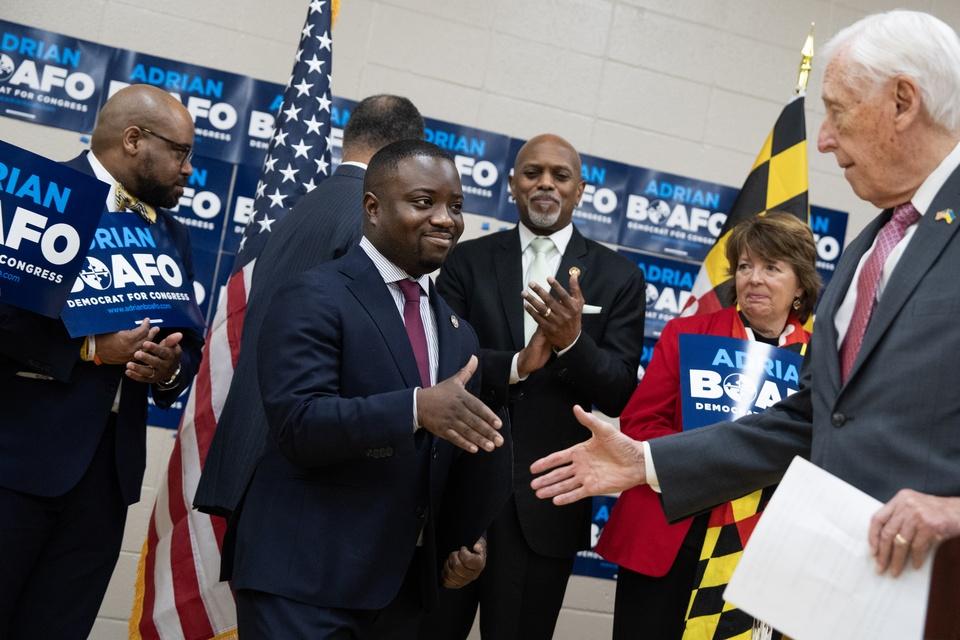
The spending is not in dispute. Protect Progress, the Democratic-facing arm of the Coinbase, Ripple, and Andreessen Horowitz funded Fairshake network, has put more than $4.9 million behind Maryland delegate Adrian Boafo in the crowded Democratic primary to succeed retiring Representative Steny Hoyer (D-Md.), as detailed in Federal Election Commission filings. What surrounds that figure is harder to parse, because two loud and opposing narratives are vying for attention. One says crypto is pure freedom and inclusion. The other says it is pure fraud.
Both are loud, and neither presents the clarity needed, especially during elections.
On her show this week, journalist Joy Reid (formerly of MSNBC, now of The Joy Reid Show) directed a pointed critique to that Maryland race and named the influx of crypto PAC money, directly and controversially. She called it “blackwashing”: an industry funneling money through a group with a progressive-sounding name to back Black candidates in Black districts, in ads that speak to everything except the industry behind the political action committee (PAC) writing the checks. On the core charge, she is right, and the filings back her. The advertising for Boafo talks about keeping ICE out of local policing, standing up to Donald Trump, and the cost of living. It does not mention cryptocurrency. The money is disclosed at the Federal Elections Commission (FEC), but only on paper, and only for those who go looking. Most citizens do not go beyond the commercials and campaign paraphernalia. The asymmetry of real-time information is obvious. One detail deserves precision, however, and precision here cuts both ways. Reid suggested Boafo had been a crypto lobbyist. The public record points elsewhere. Boafo has been a registered in-house lobbyist for Oracle, the cloud and enterprise software company, since 2021, but not a lobbyist for the crypto industry. As a description of his paid work, crypto lobbyist does not hold. Notably, at the time of this writing, his work for Oracle does not appear on his campaign website.
The crypto-lobbyist label correction does not end the matter, however, because his crypto ties are real; they just predate the super PAC money now pouring in. His ties come from his own very public record. As a state delegate he sponsored the bill creating Maryland's Digital Asset and Blockchain Technology Task Force, House Bill 470, which Governor Moore signed into law this spring, and in a 2025 post promoting the effort he wrote that blockchain is the future and urged Maryland to become the national leader in blockchain technology and crypto. What the ads hide is the funding, not the candidate's views. Boafo is one of his state's most openly pro-crypto legislators, and the industry is spending to amplify someone who already agrees with it.
Lobbying disclosures show that as an Oracle lobbyist he represented the company before the Department of Homeland Security during the years it fought for and, in late 2022, won a cloud-services contract with ICE, even as those same ads promise to keep ICE out of local policing. The Lever, which surfaced the record, notes the filings are too vague to tie Boafo personally to that contract, and his campaign casts him as a consistent ICE opponent. His rival Rushern Baker, a former Prince George's County executive, has asked publicly how voters can trust Boafo to stand up to Trump's ICE when he works for a company tied to ICE operations. The gap between the message and the record is its own kind of disclosure problem. Those disclosure questions reach his own filings. The Lever also reported that Boafo initially left his Oracle stock off a state ethics form before amending it to include the holding, and that he later revised a 2024 filing to acknowledge Oracle's business with Maryland's port authority and health benefit exchange. He has said he handled only federal matters for the company and kept a firewall between his public and private roles.
Crypto Money On Both Sides Of Black Democratic Races Boafo is not an isolated case, and the fuller pattern is where the real story lives. The same network has spent heavily on a roster of pro-crypto Black candidates. In Texas, more than $5 million from Protect Progress helped Christian Menefee, 38, unseat 78-year-old Representative Al Green in a Houston-area runoff, the most expensive House primary in the state; the ads focused on generational change and never mentioned cryptocurrency. In Georgia, roughly $4 million helped Jasmine Clark win an open primary. The candidates differ; the template is the through-line (and it’s matched on the other side of the aisle, as well): a pro-crypto contender, amplified by industry money, in ads that prioritize kitchen-table topics and never name the industry behind the money. Importantly, the same network spent millions to defeat Al Green, who is Black, because he was a staunch crypto critic who voted against the GENIUS Act and accused the industry of trying to control Congress. It has spent against other Black Democrats it views as hostile, including Illinois Lieutenant Governor Juliana Stratton. The dividing line is not race. It is the industry's friends versus its critics, and Black candidates sit on both sides of the money. Because these districts are overwhelmingly Democratic, the primary is the election, and Black voters remain the party's most loyal constituency, with about 83 percent identifying with or leaning Democratic, according to Pew Research Center. In seats this blue, the primary winner goes to Washington, and the industry is helping decide who that is.
The reason these primaries deserve such scrutiny and attention sits in the Senate. The Digital Asset Market Clarity Act, the market structure bill that would split oversight of digital assets between the SEC and the CFTC and set the rules the industry will operate under, cleared the Senate Banking Committee on May 14 in a 15-9 vote and was placed on the Senate Legislative Calendar on June 1, awaiting a floor vote. Only two Democrats joined every Republican to advance it out of committee. One was Arizona's Ruben Gallego. The other was Maryland's junior senator, Angela Alsobrooks. Alsobrooks is an original cosponsor of the GENIUS Act, last year's stablecoin law signed in July 2025, and she brokered the stablecoin-yield compromise, with Republican Thom Tillis, that moved the Clarity Act out of committee. She has also endorsed Boafo and appears in his campaign ad alongside Hoyer and Maryland governor, Wes Moore. Her record, however, cuts against any simple read that she is a crypto industry sycophant: she fought consumer-protection language into both bills, cosponsored the End Crypto Corruption Act, and called her committee vote only a vote to keep working in good faith, not a promise to back the bill on the floor. Maryland's other senator draws the contrast. Chris Van Hollen sits on the same committee and voted no, as he did on the GENIUS Act. His objection is not to the technology. He proposes stronger rules on illicit finance and disclosure, and the ethics amendment he fought for and lost, which would have barred senior government officials from holding crypto business interests while in office, failed 11-13 and remains the unresolved fight heading to the floor.
Back Home, The Money Becomes The Issue Back home, the money itself has become the issue. Maryland’s Fifth District seat is open for the first time in 45 years, the field runs to roughly two dozen Democrats, and over the weekend three of Boafo's leading rivals, the Pelosi-endorsed January 6 officer Harry Dunn, the largely self-funded Quincy Bareebe, and Baker, set their own contests aside to protest the roughly $8.8 million in outside money behind him, most of it from the crypto super PAC and an AIPAC-aligned group. They called on Hoyer, Moore, and Alsobrooks, who all endorsed him, to press him to reject it; his campaign answered that he has opposed such spending for years and is misrepresented by his rivals. His pro-crypto posture also makes him an outlier: the industry's own scorecard, Stand With Crypto, rates Maryland Democrats Anthony Brown and Kweisi Mfume, along with Van Hollen, as strongly against crypto. The industry is not amplifying a typical Maryland Democrat; it is spending to install an exception.
These are two distortions of one story, and Reid's blackwashing label cuts through both. It names the capture precisely: progressive-coded money backing chosen candidates in Black districts. But the term falls along two fault-lines, technology and race, when the actual villain sits beneath both. It is not crypto the technology, and it is not the race of the candidates, who sit on every side of this money. It is corporate money in politics, of which crypto is only the most aggressive current example. That is the broader and more accurate concern, and it is national: the machine now buying these primaries reshaped the landscape in 2024 and turned to local districts because their winners will cast the votes that decide the CLARITY Act and the bills behind it, while the politics of crypto are still unsettled. The danger in a term this sharp is that it hardens into crypto equals fraud, aimed at the technology instead of the spending. The analytic line that survives is simple. The technology is not the industry, and pro-innovation is not pro-industry. A decentralized ledger is not a super PAC, and defending the first does not require defending the second. What the 2026 primaries are testing is narrower than any slogan: whether voters in the country's most heavily Black and Democratic districts can see, before they vote, who funds the candidate on the screen and what that candidate's record actually says. Built for whom, and disclosed to whom, are not rhetorical questions here. They are the two facts a voter cannot learn from the ads alone.