
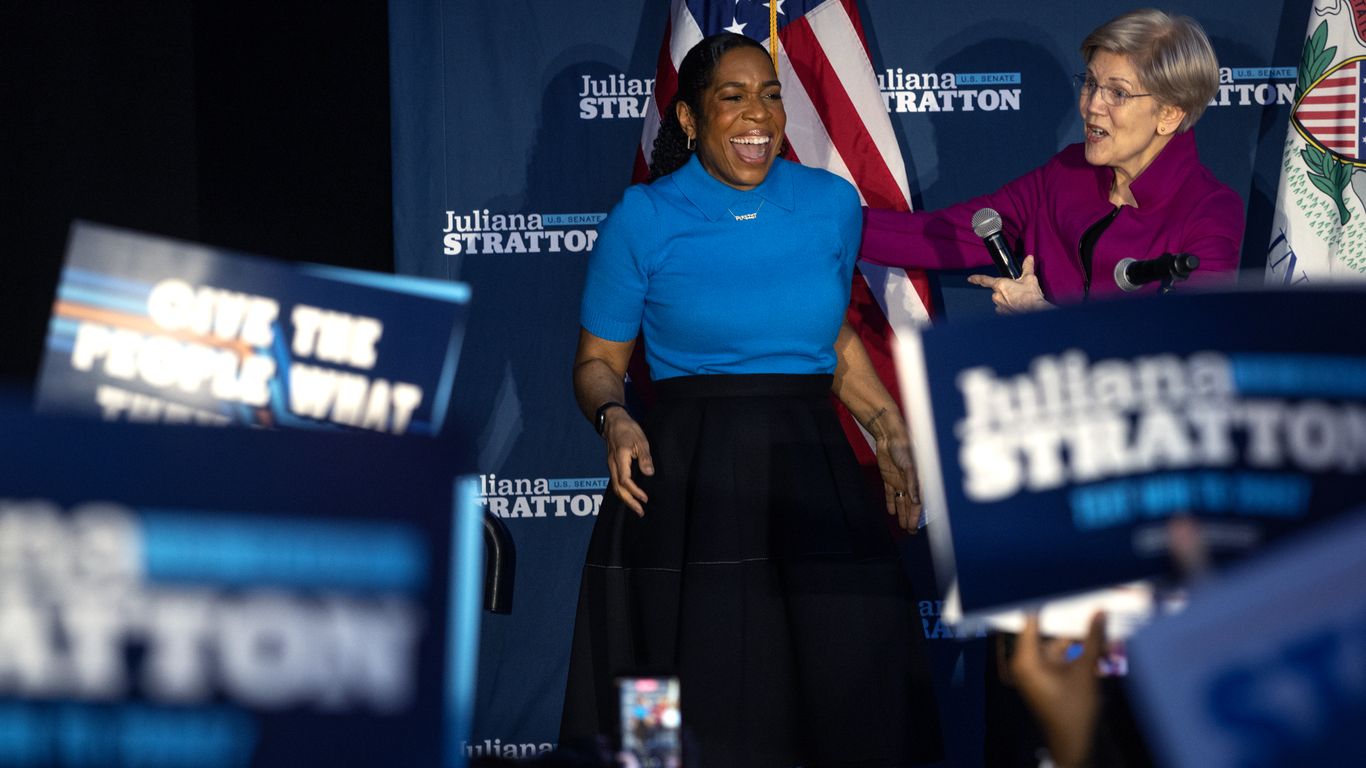
Sen. Elizabeth Warren (D-Mass.) and her allies are looking ahead to the Minnesota Senate Democratic primary to build on the win they lodged against the cryptocurrency industry this week in Illinois.
Why it matters: Crypto is wading into Democratic primaries to boost pro-crypto candidates with the industry's colossal war chest . Warren is showing up to fight back personally.
A Warren-endorsed candidate — Lt. Gov. Juliana Stratton — won the Illinois Senate Democratic primary Tuesday, despite a major pro-crypto PAC spending nearly $10 million opposing her campaign.
Warren campaigned for Stratton — who was significantly outspent by her primary rival, Rep. Raja Krishnamoorthi (D-Ill.) — in Chicago last weekend. Warren also used her expansive digital fundraising list to raise money for Stratton.
Other Democratic candidates should look at Stratton's win as a cautionary tale about the consequences of "embracing the deregulatory demands of the crypto industry," a Warren ally told Axios.
The big picture: Warren, the top Democrat on the powerful Senate Banking Committee, has established herself as a leading crypto industry foe in Congress. Now she's taking the battle to the Senate Democratic primaries.
Warren has also endorsed Minnesota Lt. Gov. Peggy Flanagan in the state's Aug. 11 primary. Flanagan is facing off against Rep. Angie Craig (D-Minn.), who has received high marks from the crypto industry.
Craig got an "A" rating from Stand With Crypto, a group that assigns grades to lawmakers based on their friendliness to the industry. Flanagan received an "F."
Stratton was also given an "F" by Stand With Crypto. Krishnamoorthi got an "A."
Between the lines: A Warren political adviser told Axios that the senator "is not going to let dark-money groups handpick compliant members of Congress to further rig the system in favor of the wealthy and well-connected."
Warren has opposed two of the major bills moving through Congress to regulate cryptocurrency and set market structure: the GENIUS Act and the CLARITY Act.
Warren argued those measures deregulated the crypto economy and didn't do enough to protect against scammers, criminals and terrorism financiers.